
Home / No implants
Versus fusion · Discseel Procedure
This is what your back can look like after implanted spine surgery.
Fusion hardware is meant to stop motion at the levels it locks. Rods. Screws. Metal left in the spine. The Discseel Procedure does not leave implants. It does not require fusion. It seals the tear with fibrin, outpatient, same-day walking.
No rods. No screws. No cages. Fibrin is placed in the disc under live X-ray, as described on How it works. Not an open fusion.
Implanted fusion
Hardware that removes motion at those levels.
These images are spinal-fusion X-rays and an open lumbar-fixation photograph. They are examples of implanted surgery, not Discseel patients, and not a promise every fusion looks like this. Traditional back surgery cannot sew an annular tear shut. That line is already on this portal from Discseel.com.
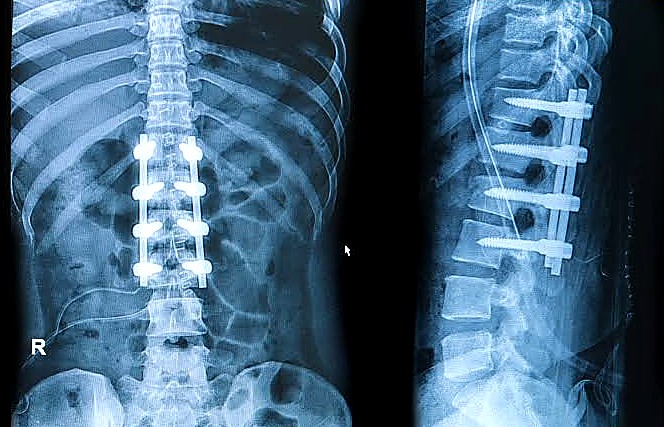
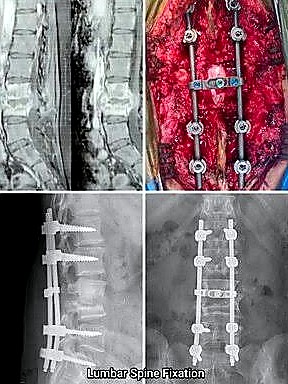
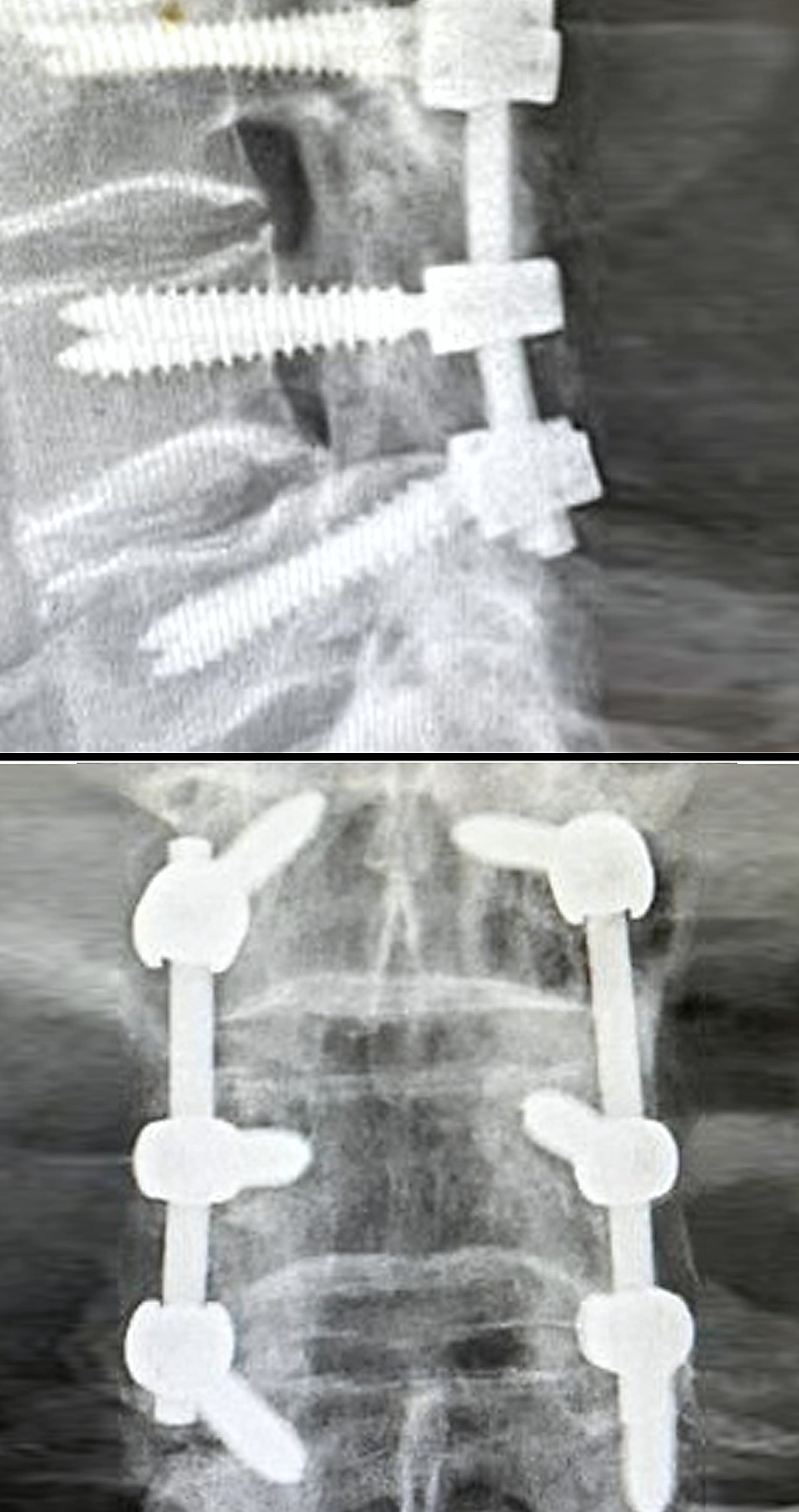
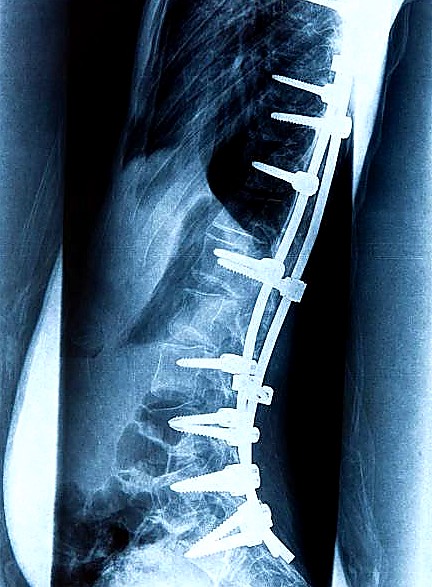
Images Andrew supplied for this contrast page. No patient names. Not Discseel.com photographs. This portal does not invent whose spine this is.
Discseel Procedure
No metal implants. Seal the tear. Keep moving.
The Discseel Procedure does not require fusion. About 30–40 minutes, outpatient. Fibrin is an FDA-approved biologic used off-label in the disc. Patients return home in about 30 minutes and walk the same day, as this portal already states.
It is not “no needles.” Fibrin is injected into disc tears under live X-ray (Annulargram, then fibrin). There is no open incision to bolt rods to bone, and nothing metal is left in the back.
Cervical fusions can damage adjacent discs. This portal already calls that the “Domino Effect.” Fusion hardware on this page is the implant version of that choice.
Inquire How it works Personal injury / MVA
Facts on this page are from existing discseel.info copy and Discseel.com lines already used here. No new success rates.